Markhr: A Vintage Serif Font That Builds Trust
As a small business owner who’s designed everything from coffee bag labels to Instagram story templates, I’ve learned one thing the hard way: your font choices quietly shape how customers perceive your brand. Not just “pretty” or “modern”—but trustworthy, intentional, and human. That’s why I reached for Markhr when rebranding my handmade ceramics studio—and haven’t looked back.
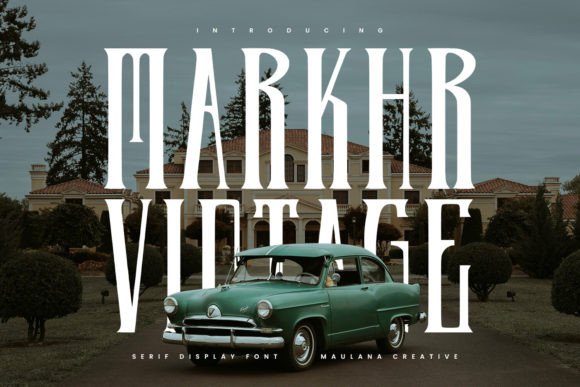
Markhr is a serif vintage display font with soft curves, subtle contrast, and gentle serifs that nod to early 20th-century letterpress work—without feeling costumed or gimmicky. It’s not a script, not a bold sans, and not overly ornate. It’s warm, grounded, and quietly confident. Think of it as the kind of typeface you’d see on a well-loved apothecary label, a boutique café menu, or a small-batch candle jar—where craftsmanship and care are part of the message.
What makes Markhr especially useful for small businesses isn’t just its charm—it’s its consistency across real-world touchpoints. When your logo, product label, website banner, and Instagram post all share the same visual voice, customers begin to recognize your brand before they even read your name. That recognition builds familiarity. Familiarity builds trust. And trust turns browsers into buyers.
Here’s where Markhr works best in practice:
- Logos & wordmarks: Use it at medium-to-large sizes for boutique names, artisan studios, or service-based brands (e.g., “Haven Coaching,” “Oak & Ember Bakery”). Its serif structure gives weight and stability—ideal for conveying expertise without stiffness.
- Packaging & product labels: On candle jars, tea tins, or skincare boxes, Markhr adds quiet sophistication. Just keep body text (ingredients, usage notes) in a clean, readable sans serif—Markhr shines as the hero, not the footnote.
- Menus & printed collateral: For cafés, florists, or local shops, Markhr elevates daily materials. Try it for section headers (“Our Pastries,” “Seasonal Arrangements”) paired with a neutral sans like Inter or Lato for descriptions.
- Social media graphics: On Instagram carousels or Pinterest pins, Markhr stands out in thumbnails—even at smaller sizes—thanks to its strong letterforms and open spacing. Avoid using it below 24pt in digital ads; reserve it for headlines and key phrases.
- Thank-you cards & packaging inserts: A handwritten note feels personal—but pairing it with Markhr in the header (“With Gratitude,” “You’re Welcome”) bridges warmth and polish.
Readability matters—especially on small surfaces. Markhr holds up well on 2-inch product labels and mobile screens when used thoughtfully: avoid tight tracking, steer clear of ultra-thin weights for print, and always test legibility in natural light. If you’re printing on kraft paper or textured stock, choose the slightly bolder weight—it retains clarity without looking heavy.
Font pairing is simpler than it sounds. Since Markhr is a display serif, pair it with something functional—not competing. A clean, neutral sans serif (like Montserrat, Poppins, or Open Sans) balances its personality while keeping body copy scannable and accessible. For a more refined look, try it alongside a classic, highly readable serif like Merriweather or Source Serif Pro—but only if your brand leans literary, editorial, or heritage-focused. Avoid stacking multiple decorative fonts; Markhr is your accent, not your entire type system.
Before rolling Markhr across your brand, test it in context. Drop it into your Canva template, mock it up on a sticker sheet, print a sample label, and check it on your phone screen. Does “Small Batch • Hand-Poured” feel right on your candle? Does your café’s “Daily Specials” banner look inviting—not fussy? Real-world testing reveals what specs and samples can’t.
And yes—check the license. Markhr is a premium font, and most vendors offer commercial licenses that cover use on physical products (like packaging and merchandise), digital assets (social posts, email headers), and client-facing work (if you’re a designer). But free downloads rarely include those rights. If you’re selling branded mugs, creating editable Canva templates, or designing for clients, confirm the license permits those uses. It’s not bureaucracy—it’s protecting your business and respecting the designer’s work.
I’ve seen too many small brands dilute their identity by switching fonts every season—or worse, defaulting to generic system fonts that blend into the background. Markhr doesn’t shout. It settles in. It says, “We made this with attention.” That’s the kind of detail customers notice—even if they can’t name it.
Whether you run a zero-waste shop, launch a wellness newsletter, design greeting cards, or roast coffee beans in your garage, your typography is part of your promise. With Markhr, that promise reads as thoughtful, timeless, and true.